Navigate FL Insurance: Home, Auto & Business in 2026

You're standing in the driveway after a storm, looking at a damp ceiling stain, a soaked garage, or a car that took more damage than you expected. In Florida, that moment usually turns into a harder question than people first realize, because the policy you thought was enough may not cover the exact loss you're dealing with. FL insurance works that way. State rules, coastal weather, and property exposure all shape what protection you need, and a Florida-only agency such as Schneider & Associates focuses its work inside those state lines.
Introduction to FL Insurance
A lot of Florida buyers learn insurance by accident, after a claim exposes the gap between “I have a policy” and “I'm protected.” A roof leak, a car accident, or a flood can reveal that one policy type only solves part of the problem. That's why FL insurance is less about one generic contract and more about matching the right coverages to the risks that come with living and driving in Florida.
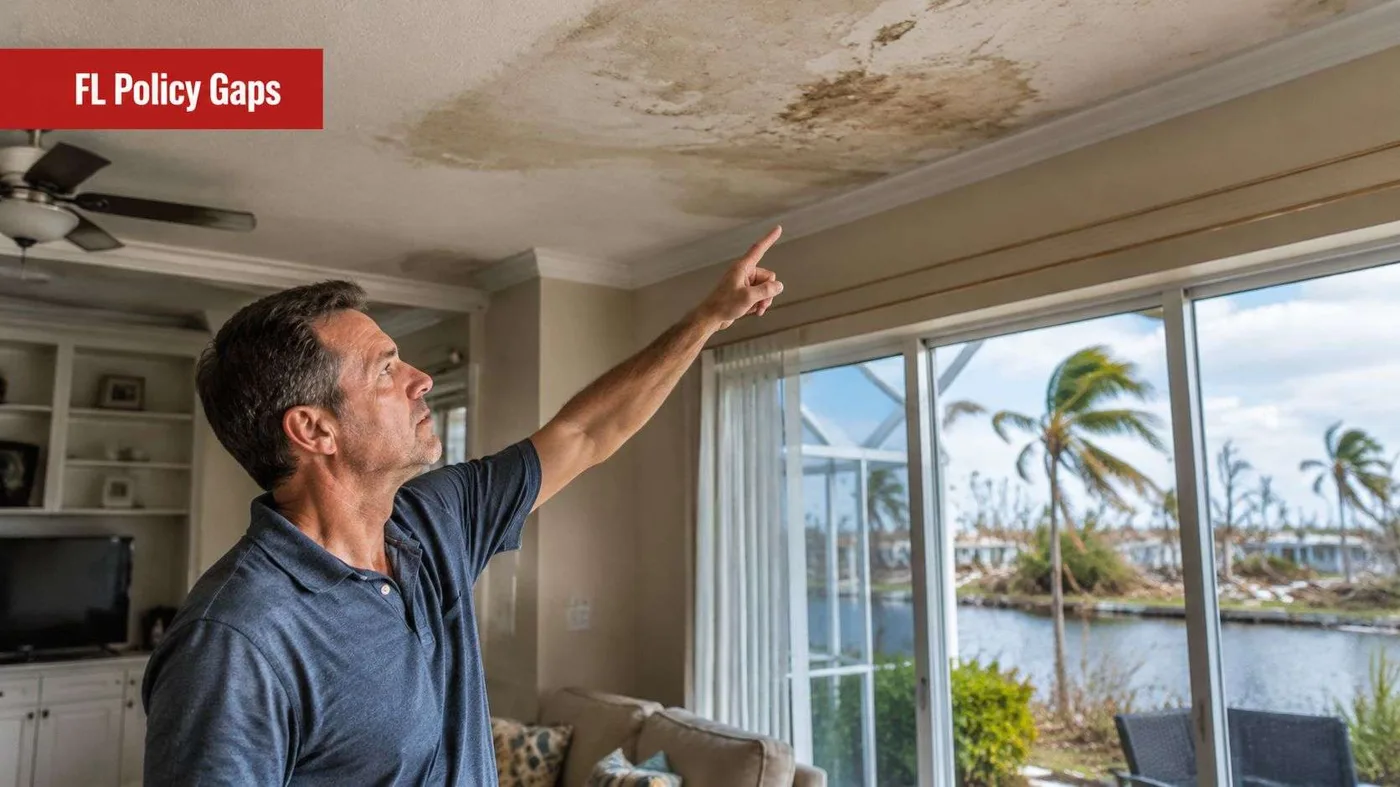
Florida is different because the state's weather and geography affect both claims and underwriting. The state's composite flood risk score is 23 on a 0 to 100 scale, which is 11 points above the U.S. county-level average of 12, and Lee County's score reaches 60 (Florida flood risk data). That kind of exposure changes how homeowners, drivers, and business owners should think about limits, deductibles, and separate flood protection.
Florida-only agencies matter here because the guidance has to stay local. Schneider & Associates operates Florida offices in Newberry and Micco, so its service model stays focused on Florida properties, roads, and commercial exposures (agency locations). That local scope helps when readers need to sort out what's required by law, what's prudent, and what's smart planning.
Practical rule: start with the risk, then choose the policy. In Florida, that usually means checking flood exposure, auto minimums, and whether your home or business needs extra protection before you look at price.
The rest of this guide walks through the state's core insurance categories in plain language. You'll see how Florida rules affect homes, cars, businesses, and flood protection, then how to reduce cost without trimming away the parts that protect you.
Florida Insurance Risks and Requirements
Florida insurance starts with the hazards. Strong wind, heavy rain, coastal flooding, and storm surge make the state's risk profile different from inland markets, and insurers price that reality into the policy. That's not a sales pitch, it's how insurance math works when claims are more likely and losses tend to be larger.
The rules follow the risk
Some requirements are legal, not optional. Florida drivers must carry Personal Injury Protection, or PIP, and Property Damage Liability, or PDL, at the state minimum level, but those minimums are not the same thing as full financial protection after a serious crash. If the other driver has little or no insurance, UM/UIM coverage is the part that helps fill the bodily-injury gap (Florida UM coverage overview).
Florida's minimum auto coverage can keep you legally on the road and still leave you exposed in a serious injury claim.
Flood rules are also strict in some mortgage situations. Properties in FEMA-designated Special Flood Hazard Areas, zones A and V, with federally backed mortgages must carry flood insurance through the NFIP (Florida flood zone guidance). That requirement is tied to the structure's location, not the owner's opinion about the weather.
Building rules are part of the protection story
Florida also uses construction standards to reduce repetitive losses. State flood-resilience guidance says dwellings in all flood zones must be raised 1 foot above base flood elevation, while critical facilities must be raised or protected to base flood elevation plus 2 feet or the 500-year flood elevation (Florida flood-resilience guidance). Coastal A and V-zone foundations must also account for scour, erosion, flood openings, and breakaway wall design.
That matters because a building code is really a loss-control tool. Higher elevation and better foundation design create a buffer against map uncertainty, wave action, and surge. FEMA's NFHL and Flood Map Service Center are the official sources for current effective flood hazard data used to determine zone designation, insurance requirements, and elevation-driven compliance decisions (Florida flood-resilience guidance).
If you're comparing policies in Florida, don't start with price alone. Start with the hazards that can break the structure or trigger a claim.
The takeaway is simple. Florida's insurance rules are shaped by real physical exposure, not just paperwork. That's why homeowners, drivers, and business owners often need to think in layers, legal minimums, plus the extra coverages that keep one claim from turning into a financial mess.
Coverage Options for Florida Residential Properties
A Florida home policy should behave like a storm shelter. It needs to cover the structure, the stuff inside it, and the liability side of a loss, but it also needs to match the kind of home you own. A single-family house, a condo, and a mobile home don't face the same exposures, so they shouldn't rely on the same coverage assumptions.
Match the policy to the property type
For a traditional home, the main question is how much dwelling coverage you need and whether the policy includes enough contents and liability protection. In Florida, a policy also needs to fit the roof, construction type, and neighborhood exposure, especially if wind damage is part of the normal risk picture. Condo owners usually care more about interior improvements, personal property, and association boundaries than the outer shell of the building.
Mobile home coverage needs a separate review because the structure itself faces different wind and attachment issues than a site-built house. That's where policy language matters more than marketing. A cheap premium won't help if the contract excludes the part of the home that gets damaged.
Don't ignore endorsements and building upgrades
Florida homeowners often need ordinance or law coverage, especially if local rules require rebuilding changes after a covered loss. If a storm damages part of the home, code upgrades can quickly become part of the repair bill. That's why endorsements matter as much as the base policy.
Wind mitigation is another key point. Features like stronger roof connections, shutters, and reinforced openings can improve the risk picture and sometimes support more favorable pricing. Even when a policy is already in place, those physical improvements help make the home harder to damage in the first place.
The cost gap also tells a story. The average annual cost of homeowners insurance in Florida is $2,625, compared with a national average of $1,272 (Florida homeowners insurance pricing). That difference doesn't mean every Florida policy is overpriced. It means the state's property exposure is higher, so shoppers need to compare limits and exclusions as carefully as they compare premiums.
For readers who want a deeper look at hurricane-related property protection, this Florida hurricane damage guide is a useful next read.
Practical rule: if you can't explain what part of the house is covered, what's excluded, and what the deductible applies to, the policy still needs a closer look.
Before you buy, ask three things. What part of the building is insured, what endorsements are included, and what happens if code upgrades are required after a claim. Those questions sound simple, but they're the difference between a usable policy and a frustrating one.
Understanding Florida Auto Insurance
Florida auto insurance confuses people because the state mixes legal minimums with gaps that only show up after a crash. The legal part is easy to memorize, but the practical part takes a little more thought. A driver can be fully compliant and still be underprotected when injuries are serious.
Minimum coverage is not the same as full protection
Florida's minimum auto coverage includes $10,000 in PIP and $10,000 in property damage liability, but that minimum does not protect your own bodily injuries when the other driver is uninsured (Florida UM coverage overview). That's where UM/UIM coverage becomes the important gap-filler. It steps in when the at-fault driver doesn't carry enough insurance to make you whole.
A simple way to think about it, your minimum policy is the lock on the door, while UM/UIM is the extra layer inside the house. You can be legally compliant without having enough real protection for a major injury claim. That distinction matters more in Florida because uninsured driver exposure is a real issue in the state.
Read the policy like a claim might happen tomorrow
The best auto review starts with the worst-case scenario, not the monthly bill. If you're driving a newer vehicle, an older paid-off car, or something customized, the policy should match the vehicle's actual value and repair cost. For readers who want help thinking through value-based protection, Leverage Auto Appraisals can be a useful reference point when evaluating how agreed-value concepts work.
Practical rule: if an accident happens and the other driver has weak coverage, your own policy needs to carry the weight.
Shoppers should also ask how the insurer looks at driving history, ZIP code, vehicle type, and credit-based factors. Those details can all affect the quote even when the required minimums are the same. The point isn't to chase the lowest number. The point is to make sure the policy matches the level of risk you'd face after a loss.
For a side-by-side review of minimums and the legal structure behind them, this Florida car insurance requirements page is worth reading before you renew.
Business and Commercial Insurance in Florida
Florida business owners face the same weather as homeowners, but the exposure is wider. A storefront, office, workshop, restaurant, or service company can lose property, interrupt revenue, and face liability from the same storm event. That's why commercial insurance should be built around how the business operates, not just around a standard application.
Start with the core policy structure
A Business Owners Policy, often called a BOP, combines property and liability protection in one package. That works well for many small businesses because it keeps the coverage review focused on the building, contents, and common liability exposures. A standalone general liability policy can make sense when the business doesn't need the property package or wants to separate exposures more clearly.
For higher-value operations, a commercial umbrella can sit above primary policies and add another layer of liability protection. That matters in Florida because a claim can move fast from a simple accident to a larger lawsuit when there's property damage, injury, or both.
Think about the business type, not just the building
Industry-specific coverage matters just as much as the base policy. Trucking, contractors, restaurants, fitness studios, veterinary practices, and mobile home park operations all carry different loss patterns. A contractor needs different liability and equipment considerations than a restaurant, and a mobile home park has a very different mix of property and tenant exposure than a medical office.
Hurricane and flood risk also change the underwriting conversation. Businesses near the coast or in low-lying areas should ask how the policy handles storm damage, water intrusion, ordinance or law issues, and temporary shutdowns after a covered event. If a storm forces repairs, code compliance can create extra costs that the basic form won't always absorb.
For owners who are planning growth, financing, or a sale, options for business acquisition financing can sit alongside insurance planning, because lenders and buyers often want the risk picture cleaned up before a transaction moves forward.
A business policy should answer one question clearly, “If the building is damaged tomorrow, what keeps the company open next week?”
A helpful review also asks who needs to be insured, what property is on site, and whether contracts require higher liability limits. Florida businesses rarely fail because of one missing line item. They fail when several small gaps stack up after a storm, a slip-and-fall, or a major equipment loss.
For a simple breakdown of how the core forms differ, this comparison of business owners policies and general liability gives owners a good place to start.
Flood Insurance and Hidden Risk Factors
Florida's flood story is bigger than the places that already show up on a map. The state's average composite flood risk score is 23, which is 11 points above the U.S. county-level average of 12, and Lee County ranks at 60 (Florida flood risk data). Those numbers matter because flood losses aren't just possible in Florida, they're frequent enough to shape the whole insurance conversation.
Why buyers get surprised
One of the biggest hidden risks in Florida is simple, buyers may not be told enough. An independent report says Florida is among 21 states with no requirement to disclose flood risk to buyers, which means a purchaser may not learn whether a property is in a flood zone, has flooded before, or needs flood insurance until after closing (Florida flood disclosure report). That's a serious gap because the wrong assumption at the point of purchase can lead to a coverage problem later.
The practical mistake is asking only, “Do I need flood insurance?” The better question is, “What is this property's actual flood exposure before I buy it?” That shift changes the whole process. Buyers stop relying on a seller's casual comments and start checking the home the same way a lender would, through maps, elevation data, and policy rules.
NFIP and private flood coverage do different jobs
Flood insurance isn't one-size-fits-all. The NFIP is the federal program used in mandatory situations tied to federally backed mortgages in Special Flood Hazard Areas, and private flood policies may offer different terms depending on the carrier and the property. The key point is that flood coverage is separate from standard homeowners insurance, so a homeowner can be well insured for fire and wind while still being exposed to flood loss.
Practical rule: if water can enter from the ground up, assume the standard home policy may not be enough on its own.
The smartest pre-purchase checklist is straightforward. Check the FEMA flood zone, ask for an elevation certificate if one exists, and compare the home's location against the lender's requirements. Florida's official flood tools and state guidance are there for a reason, they help turn a vague fear into a specific coverage decision.
What to verify before you close
- Flood zone status: confirm whether the property sits in a mapped high-risk area.
- Mortgage requirement: check whether the loan triggers a flood insurance requirement.
- Elevation details: look at the structure's height relative to local flood benchmarks.
- Policy timing: don't wait until the weather forecast gets ugly to bind coverage.
The lesson is that flood risk in Florida often hides in plain sight. A home can look safe, sit inland, and still need a serious flood review before purchase. That's why timing, disclosure, and mapping matter as much as the premium itself.
Tips to Lower Your Florida Insurance Costs
Lowering Florida insurance costs works best when you treat the policy like a set of levers, not one giant bill. Some changes affect the quote immediately, while others improve the home or car over time and support better pricing later. The goal is to trim waste, not strip out protection.
Use the savings moves that matter most
Bundling home and auto can simplify the account and may help with pricing. Wind mitigation upgrades matter too, especially when they reduce the chance of damage to the roof, windows, and openings. If your deductible is too low for your budget, raising it carefully can reduce the premium, but only if you are prepared to cover the out-of-pocket amount after a claim.
Maintaining a clean claims history helps as well. Frequent small claims can make a file look unstable, even if each loss felt minor at the time. Florida shoppers should also compare quotes using the same limits and deductibles, because apples-to-apples shopping is the only way to tell whether one quote is better.
Shop the policy, not just the renewal notice
A lot of Florida homeowners keep a policy too long because renewal feels easier than shopping. That's understandable, but it can also hide better fit options. If you're ready to compare terms, Coveredly's guide to switching insurance is a useful way to organize the process without missing a cancellation date or replacement gap.
Practical rule: buy the protection first, then look for the savings. A lower premium is not a win if it leaves the home or car exposed.
A few drivers and homeowners also forget that credit-related factors, ZIP code, and property features can influence pricing. That doesn't mean every change is in your control, but it does mean small improvements can add up. Reinforced doors, shutters, stronger roof attachments, and better policy hygiene all support a cleaner risk profile.
The best Florida cost strategy is a balanced one. Keep the coverage that matters, remove duplication, and make the property or vehicle less expensive to insure over time. That's the difference between cheap coverage and smart coverage.
Next Steps with a Florida Independent Agency
A quick review can save a lot of guesswork. Schneider & Associates operates Florida offices in Newberry and Micco, with the Florida locations listed at 285 NW 138th Terrace, Suite 100, Newberry, Florida 32669 and 7960 U.S. 1, Micco, Florida 32976 (Florida office listing). The Micco office hours are Monday through Thursday from 9:00 AM to 5:00 PM, Friday from 9:00 AM to 3:00 PM, and closed on Saturday and Sunday.
Bring your declarations page, property details, and any flood zone information you already have. Ask for a home, auto, or business review that checks limits, deductibles, and flood exposure together. A local Florida agency can help you line up the policy with the actual property or vehicle risk instead of guessing at the right fit.
Have questions about your coverage?
Our Newberry and Micco, FL team can walk through your policy and find the right coverage at the right price.
Get a Free Quote