Flood Insurance in Micco: A Complete Florida Homeowner Guide

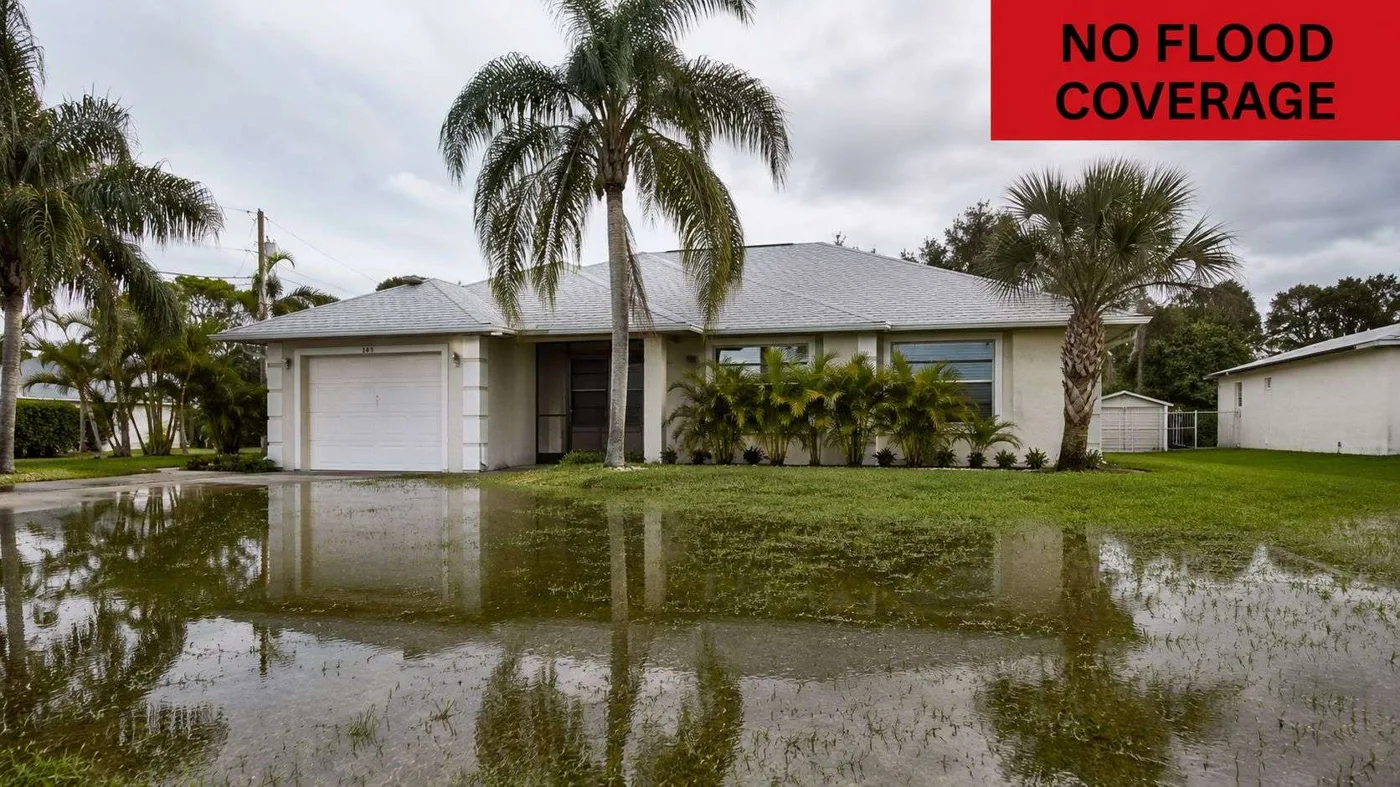
You're standing in your Micco house after a hard rain, checking the floors and looking for that first sign of water. The roof looks fine, the windows are intact, and your homeowners policy is sitting in a drawer somewhere, so you assume you're protected. Then you learn the part too many Florida owners learn too late, flood damage is a separate problem, and the policy you already pay for usually won't touch it.
That gap is what catches people off guard in coastal Florida. Wind may be part of your homeowners coverage, but rising water, storm surge, and floodwater sit in a different bucket entirely, and in Micco that difference can decide whether a claim gets paid or gets denied.
Why Your Standard Homeowners Policy Won't Save You
A Micco homeowner gets through the storm, walks back inside, and sees water across the living room floor. The drywall is soaked, the baseboards are ruined, and the furniture is done. Then the adjuster explains the hard truth, standard homeowners insurance does not cover flood, and Florida's Office of Insurance Regulation says you need a separate flood policy for rising water losses Florida flood insurance guidance.
That distinction matters more here than in most places. In a coastal Florida community like Micco, wind and water usually arrive together, but they're treated differently under insurance. A roof torn by wind may be handled under the home policy, while storm surge or inland flooding belongs under flood coverage, not homeowners coverage.
The real problem is timing
People often buy insurance after they feel exposed. That can backfire fast, because NFIP flood policies typically have a 30-day waiting period before they take effect unless a loan-related exception applies NFIP Summary of Coverage Brochure. If you wait until a storm is already on the forecast, you may be too late.
Practical rule: Don't assume “covered by homeowners” includes any kind of water that comes from outside the house. It usually doesn't.
This is why I tell Micco owners to read their policies with a simple question in mind, “Does this protect me from water that comes in after the ground, street, or canal rises?” If the answer is no, you've found the gap that matters.
Understanding Micco's Flood Zones and Mandatory Coverage Requirements
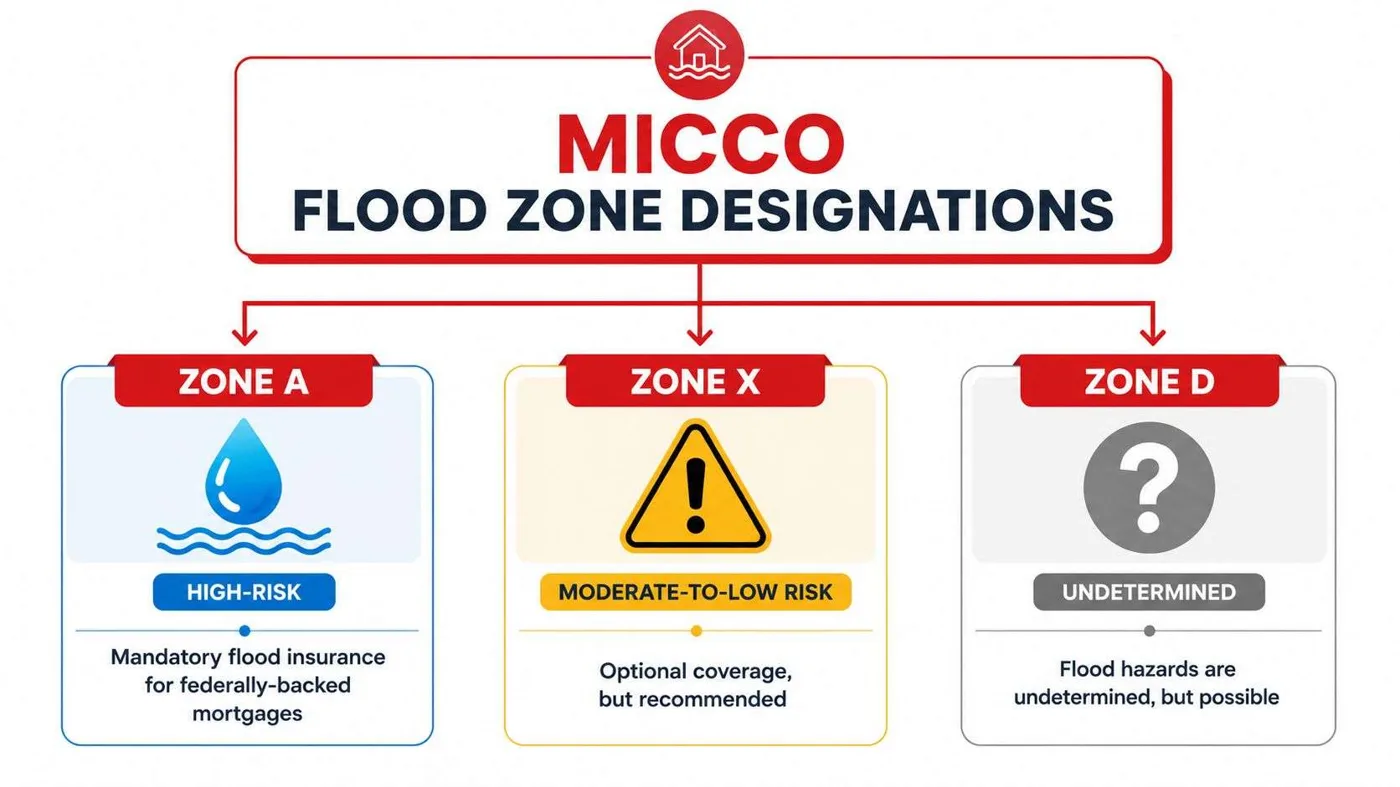
Micco flood decisions start with the map, but they do not end there. FEMA-style flood-zone status drives underwriting, and properties in A or V zones are treated as Special Flood Hazard Areas. For federally backed mortgages, flood insurance is generally required when any part of the structure sits in an SFHA, and the minimum required amount is tied to the lesser of the loan balance, the structure's replacement-cost value, or the NFIP maximum available Fannie Mae flood insurance requirements.
That rule is enforced, and lenders do not get to improvise around it. Under federal flood-insurance rules applied in Florida, the trigger is a three-part test, the community participates in the NFIP, the property is in a mapped floodplain or SFHA, and the borrower is using a federally insured, regulated, or supervised loan Flood insurance purchase guidance. If those conditions line up, the policy is required.
Citizens adds another layer of pressure
Florida's Citizens rules make flood coverage more than a lender issue. New personal lines residential policyholders with wind coverage in FEMA-designated SFHAs had to carry flood insurance starting April 1, 2023, and existing policyholders in those areas had to comply on renewal on or after July 1, 2023 Citizens flood coverage rules. Citizens also phased in flood requirements by insured property value for other residential policies with wind coverage, starting at $600,000 or more on January 1, 2024, then $500,000 or more on January 1, 2025, $400,000 or more on January 1, 2026, and all other policies projected to be required on January 1, 2027 Citizens flood coverage rules.
What to do with your own property
Do not guess at your zone. Check whether your address sits in a mapped SFHA, then look at how your lender treats the loan. If you are in a Citizens-backed policy environment or have a mortgage that depends on federal rules, the flood requirement can show up even when the house feels “high enough” to the owner.
Bottom line: The flood zone is not just a map label. In Micco, it can change your mortgage compliance, your renewal requirements, and your premium.
For a deeper look at how zone A properties are handled in Florida, review Florida flood zone A guidance.
NFIP vs Private Flood Insurance What's the Difference
Micco owners usually compare two paths, the National Flood Insurance Program and private flood insurance. NFIP is the standard federal framework. It uses separate building and contents coverage, with standard maximums of $250,000 for a 1 to 4 family dwelling structure and $100,000 for contents NFIP Summary of Coverage Brochure. For some homes, that is enough. For others, it leaves a serious gap.
Private flood insurance gives carriers more room to structure coverage and set limits, but the right fit depends on the house, the contents, and what the lender will accept. The key question is not which label sounds better. It is which policy matches the risk you own.
| Feature | NFIP Coverage | Private Flood Insurance |
|---|---|---|
| Building coverage | Standard maximum of $250,000 for a 1 to 4 family dwelling | Policy structure can vary by carrier |
| Contents coverage | Standard maximum of $100,000 | Policy structure can vary by carrier |
| Waiting period | Usually 30 days | Varies by policy and carrier |
| Covered loss | Direct physical loss caused by flooding, not wind | Depends on policy wording |
| Best fit | Homes that need a clear federal compliance path | Homes that need more flexibility in design and limits |
How to think about the choice
If your mortgage requires a federally compliant flood policy, start there. Then compare how much building coverage you need, how much contents exposure you have, and whether the waiting period creates a problem for your timing. I also look at the home's replacement-cost value before I recommend a number, because underinsuring the structure is the mistake that shows up after a loss, not before it.
For Micco and nearby Indian River County homeowners comparing local options, review flood insurance in Indian River County.
How to Buy Flood Insurance in Micco
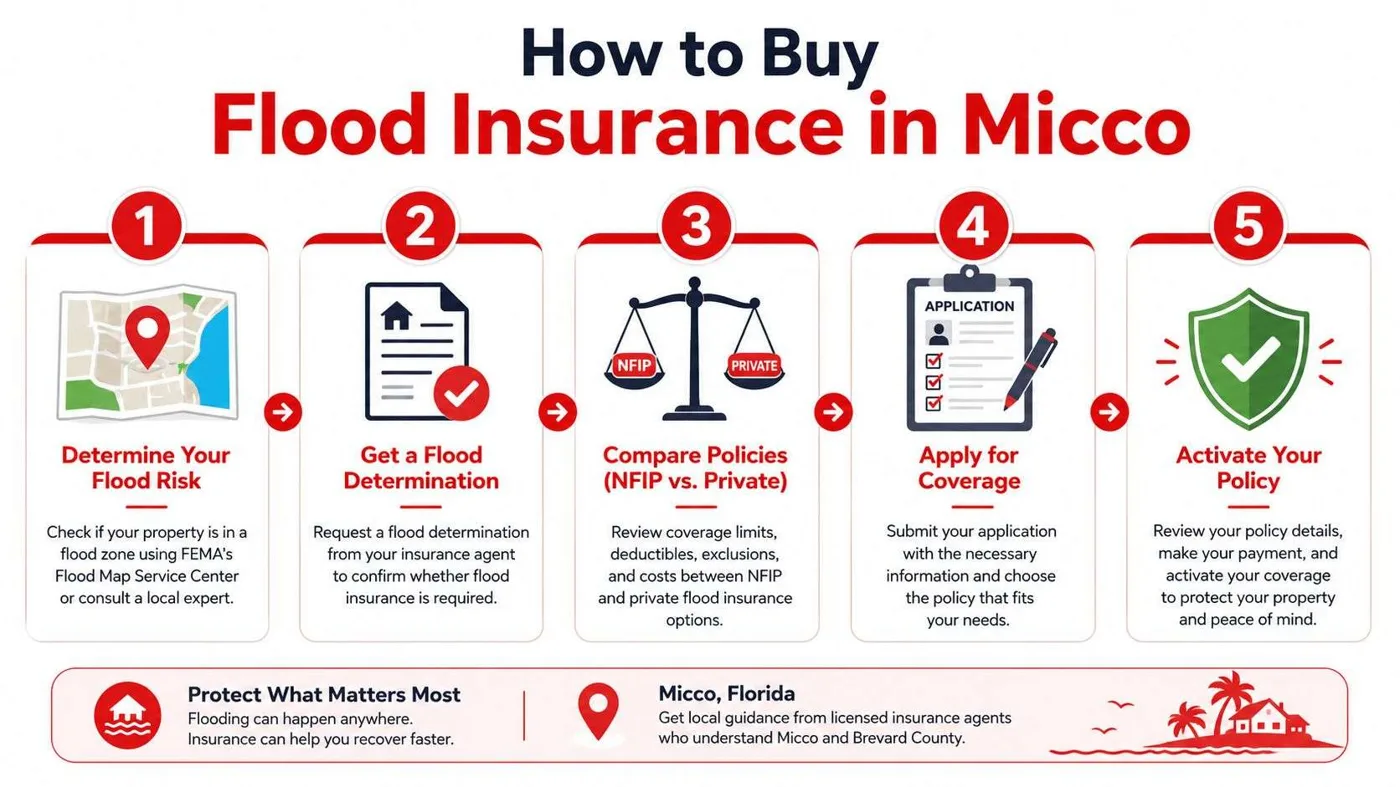
Start with the property, not the quote. Get a flood determination first, because zone status shapes everything that follows, from lender compliance to pricing and policy type. If the home has an elevation certificate, keep it handy, because the building's height relative to base flood expectations can affect the underwriting conversation.
Then decide whether you need the minimum required policy or a broader protection layer. I tell owners to separate building value and contents exposure right away, because those are different numbers and should be treated that way.
A clean way to handle the purchase
- Determine Your Flood Risk. Confirm whether the home sits in an A, V, or lower-risk area.
- Get a Flood Determination. Use the address and property details to see what lenders and carriers will see.
- Compare Policies. Review NFIP and private options side by side.
- Apply for Coverage. Submit the required property and loan documents.
- Activate Your Policy. Don't let the waiting period surprise you.
Keep the homeowners policy and the flood policy separate in your mind. They solve different problems.
If your lender escrows insurance, Florida's rules can affect the purchase right away. For loans made, increased, extended, or renewed on or after January 1, 2016, regulated lenders or servicers generally must escrow flood insurance premiums and fees for residential improved real estate or mobile homes in a special flood hazard area unless an exception applies Federal flood escrow rule summary. That rule includes exceptions such as subordinate liens, certain condominium or HOA master policies paid as a common expense, home equity lines of credit, and nonperforming loans that are 90 or more days past due.
If you are not sure whether your property falls into that category, review whether Zone X still requires flood insurance in Micco. That question comes up often, and the answer depends on the lender, the loan, and the home's actual risk profile.
Owners also need to check their drainage. West Tennessee soil drainage tips give a useful example of how surface water problems build when the ground cannot move water away fast enough.
The Hidden Risk Why Properties Outside High-Risk Zones Still Need Coverage
Micco owners outside the mapped high-risk areas like to assume they are safe. That assumption is too loose. National testimony has shown that a meaningful share of flood losses happen outside Special Flood Hazard Areas, and the reason is simple, many owners skip coverage because no lender forced the issue National flood loss testimony.
That is the mistake buyers make when they stop at the flood map. A map only tells you how a parcel is labeled. It does not tell you how local drainage behaves in a hard rain, how storm surge backs up in a low-lying pocket, or how fast runoff moves through a neighborhood when the system is overwhelmed.
Local exposure is the real risk
If your driveway holds water after a strong storm, your property already has a warning sign. Poor drainage, grading problems, and runoff patterns can turn a supposedly lower-risk lot into a claim no one expected. For a practical look at drainage trouble and yard flooding behavior, West Tennessee soil drainage tips show how surface water problems build when the ground cannot move water away fast enough.
That lesson still applies in Florida, even though the soils and weather patterns differ. Water follows the path of least resistance. If Micco streets, swales, or lots cannot move water out quickly, the loss potential is real whether the property sits in a labeled high-risk zone or not.
Do not confuse “not required” with “not exposed.” That mistake costs people money after the storm, not before it.
For homeowners trying to decide whether Zone X really means they can skip coverage, Zone X flood insurance guidance explains why that assumption often fails. As noted above under Citizens requirements, a policy trigger can come from the lender and the property details, not just the flood map.
Filing a Flood Insurance Claim What to Do When Disaster Strikes
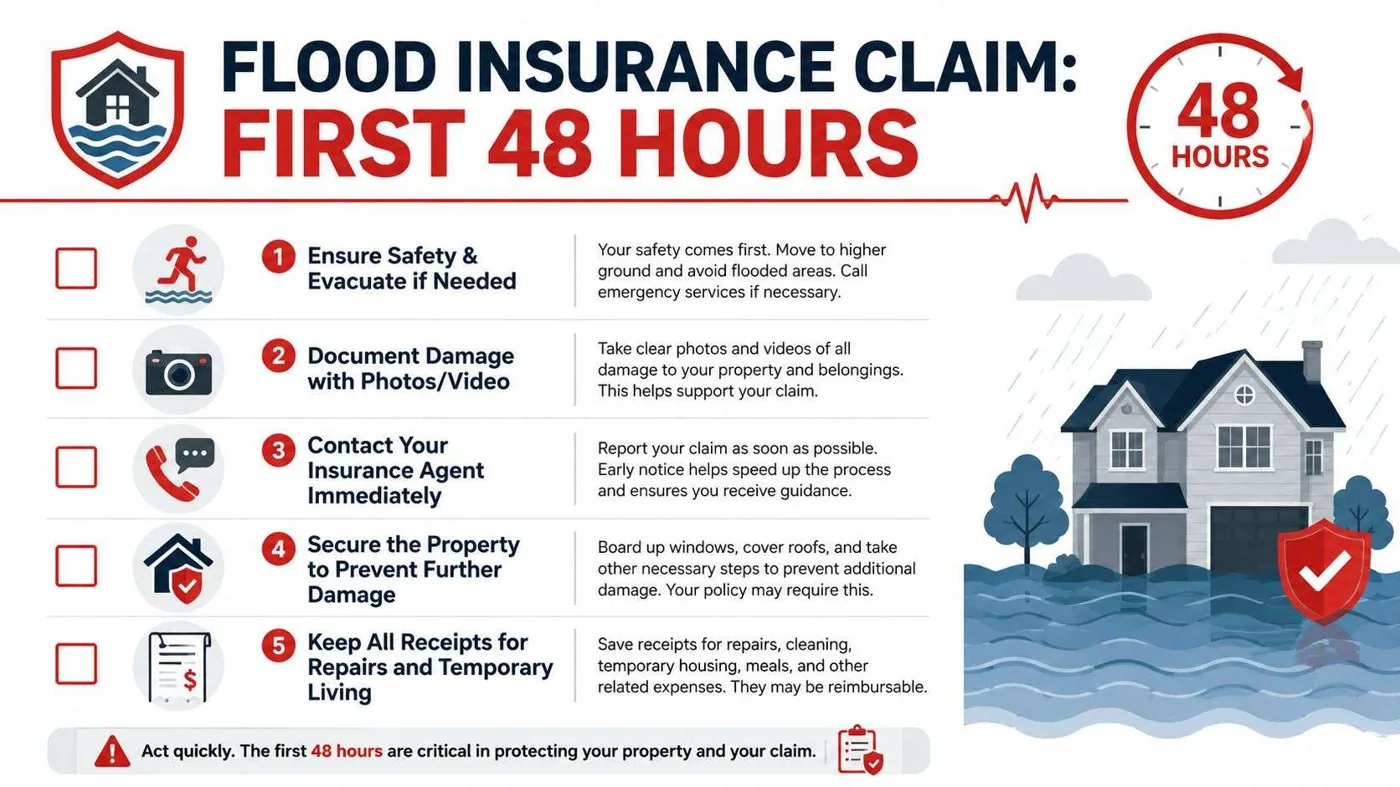
The first 48 hours matter. Before anything else, make the property safe and keep people out of standing water, damaged outlets, or unstable areas. Then start documenting every room with photos and video, because your insurer needs to see what happened before cleanup changes the scene.
After that, call your agent and start the claim file. Don't wait until you've thrown everything away. The adjuster needs a record of building damage and contents damage, and those are handled separately under flood coverage.
What to do first
- Ensure Safety and Evacuate if Needed. Floodwater can hide electrical and structural hazards.
- Document Damage with Photos and Video. Capture every affected room, item, and exterior area.
- Contact Your Insurance Agent Immediately. Get the claim moving while details are fresh.
- Secure the Property. Prevent more damage without making permanent repairs before inspection.
- Keep Receipts. Save costs tied to emergency repairs and temporary living needs.
Flood claims go smoother when the owner stays organized. That means one folder for photos, one for receipts, and one for policy paperwork. If you disagree with the settlement, push back with documentation, not frustration. Adjusters respond to clear evidence, and a complete file is stronger than a memory of what the room looked like.
Your Next Steps Getting Personalized Flood Insurance Guidance
Micco flood coverage should be reviewed like a living part of your insurance plan, not a one-time purchase. Flood maps change, mortgages change, property values change, and Florida rules can force coverage where owners didn't expect it. That's why annual review matters, especially if your home sits anywhere near a zone boundary or in a Citizens-backed policy structure.
I'd have a Florida agent review three things at the same time, flood zone status, mortgage requirement, and actual coverage limits. That's where Schneider and Associates Insurance Agencies fits naturally, since the agency writes Florida policies, works with flood coverage, and can review both NFIP and private-market options for Micco homeowners.
What a good review should cover
- Your flood-zone designation, including whether the property sits in or near an SFHA.
- Your lender's requirement, including whether the loan triggers mandatory flood coverage.
- Your building and contents exposure, so you don't underinsure the parts that matter most.
- Your renewal timing, so the policy is in place before a storm or mortgage deadline.
If you're in Micco and you've been relying on your homeowners policy to protect you from water, stop doing that. Get the flood piece checked, get the limits right, and make sure the policy is active before you need it.
Have questions about your coverage?
Our Newberry and Micco, FL team can walk through your policy and find the right coverage at the right price.
Get a Free Quote