Homeowners Insurance Near Jonesville: 2026 Guide

You open your renewal, see a premium that feels higher than it should be, and start wondering whether living inland near Jonesville is supposed to be simpler than this. That reaction is normal. A lot of homeowners in this part of Alachua County assume the biggest insurance headaches belong to the coast, then discover Florida pricing still has its own logic even when you're nowhere near the beach.
The good news is that Homeowners Insurance Near Jonesville usually comes down to a set of specific trade-offs you can manage. Your roof, your construction type, your flood exposure, and the carrier you choose matter far more than is often understood. Once you understand those moving parts, the market becomes a lot less mysterious.
Securing Your Home in Jonesville A Unique Challenge
A Jonesville homeowner usually starts in one of two places. Either you're buying a house and need coverage quickly for closing, or you've owned your home for years and your renewal jumped enough that it finally got your attention. In both cases, the first mistake is assuming your premium should look like a national average.
Florida doesn't price home insurance like most states. The state average annual premium reaches $6,060 for a policy with $300,000 in dwelling coverage, while inland North Florida areas such as Gainesville and Tallahassee average under $5,000 annually, which shows how much location inside Florida changes the equation according to Florida homeowners insurance cost data from Insurify.
That inland advantage matters for Jonesville residents. You're not dealing with the same pricing pressure as coastal homeowners who face direct shoreline exposure, but that doesn't automatically mean your quote is low. It means you have room to make smarter decisions because your property starts from a better risk position than a similar home on the coast.
Practical rule: Don't treat a Florida premium as fixed. Treat it as negotiable within the limits of your home's actual risk profile.
One of the most useful ways to approach that negotiation is to think in terms of prevention and documentation. If you haven't reviewed your roof condition, updates, and basic property exposures lately, it helps to start with practical insurance risk management strategies that make your home easier to insure and easier to defend during the quote process.
Here's what works better than guessing:
- Know your starting point: Gather your current declarations page, roof age, and update history before you shop.
- Think like an underwriter: A solid inland location helps, but condition and construction still drive the final number.
- Separate must-have coverage from nice-to-have extras: That keeps you from overpaying in the wrong places while missing something important.
Jonesville sits in a part of Florida where smart homeowners can still improve outcomes. That's a very different problem from being stuck with pure coastal pricing and having almost no room to maneuver.
Decoding Your Florida Homeowners Policy
A homeowners policy isn't one bucket of protection. It's a package, and the value depends on whether each part matches the way you use your home.
What the main policy parts actually do
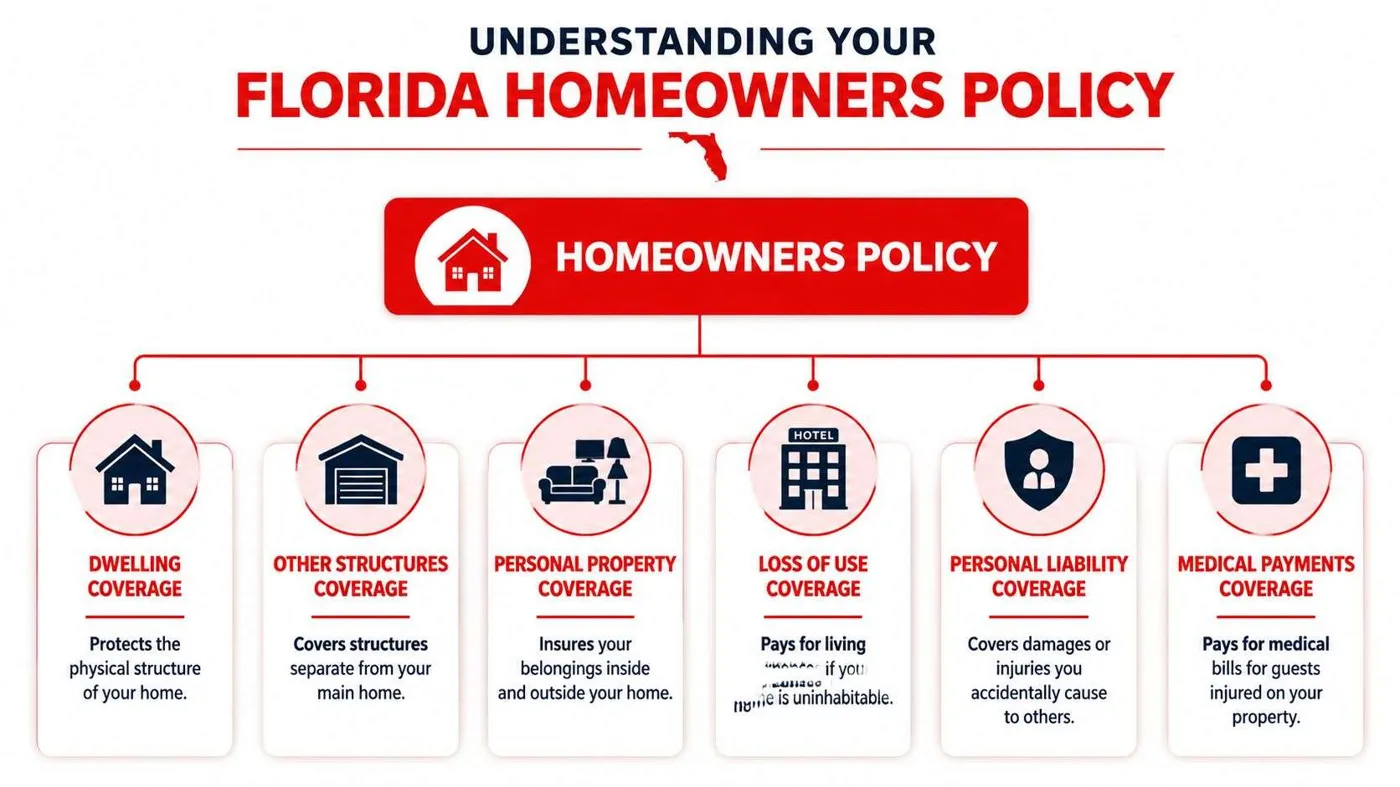
For most single-family homes, the policy discussion starts with Dwelling Coverage. That's the part intended to protect the physical structure of the house itself. If a covered loss damages the roof, walls, or attached systems, this is the coverage people are usually talking about.
Other Structures Coverage applies to detached features on the property, such as a shed or a separate garage. Personal Property Coverage helps with belongings inside the home. Loss of Use can help with temporary living expenses if a covered loss makes the home unlivable. Personal Liability and Medical Payments address injuries or property damage involving other people.
That sounds straightforward until you compare quotes and realize one premium may be lower because it trimmed a limit you didn't notice.
A cheap quote can be expensive if it leaves the house underinsured or strips out protection you assumed was there.
A practical review should include these questions:
- Dwelling limit: Does it reflect the home as it sits today, including major updates?
- Detached structures: Do you have structures on the property that need attention?
- Personal property: Would the default limit feel realistic if you had to replace what's inside the house?
- Liability: Is the limit enough for the way you live, entertain, or use the property?
Why insurers focus so hard on roof age
In the Jonesville area, the premium isn't driven only by a broad county average. Insurers use granular wind exposure zones, and roof age and construction type are often the main cost drivers. For this area, an older home from the 1980s can carry premiums 132% higher than a newer home from 2020, with annual costs moving from about $7,914 to $18,365 based on structural vintage alone, as outlined in Florida home insurance county and micro-zone guidance.
That's why agents ask so many detailed questions about the roof. They're not making small talk. They're trying to place your home accurately within Florida underwriting rules that care about wind performance, age, and material condition.
What doesn't work is relying on broad local assumptions like “I'm near Gainesville, so my rate should be average.” What works is proving the specific details of your house. A newer roof, updated features, and complete records give an underwriter a cleaner file and give you a fairer quote.
Navigating Florida's Critical Risks Flood and Wind
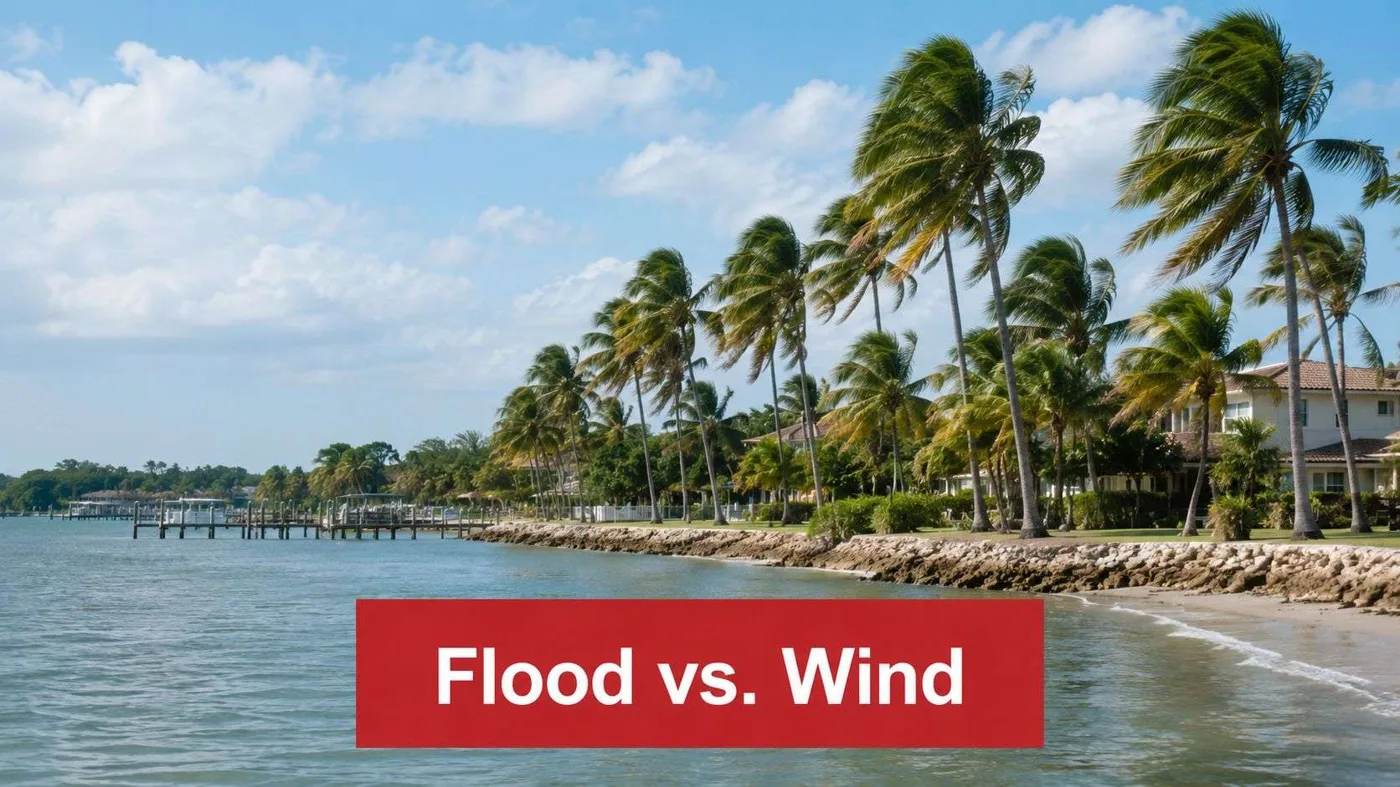
Inland homeowners near Jonesville get tripped up most often. They know hurricanes affect Florida, but they don't always realize that wind and flood are handled as two separate insurance questions.
Wind is part of the homeowners conversation
For Florida homeowners, windstorm protection is part of the standard conversation because of the state's hurricane exposure. If a storm damages the roof or wind sends debris into the structure, homeowners usually expect that risk to be addressed within the policy framework.
The confusion starts when water enters the picture. A storm can produce both wind damage and flooding in the same event, but the policy response may be completely different depending on how the loss happened.
If wind damages shingles and rain enters through that opening, that's a different coverage analysis than rising water entering from outside the home.
After a storm, documentation matters almost immediately. Photos, mitigation receipts, and a clear timeline can make a major difference in how smoothly the claim is handled. Homeowners who want a practical checklist can review these tips for homeowners after a storm before the next severe weather event.
Flood is separate and that distinction matters
Florida has no state law requiring homeowners to carry flood insurance, but mortgage lenders often require it in high-risk flood zones designated as A or V zones. For many other homeowners, it remains optional, though often still important, according to Florida flood insurance requirements and lender guidance from U.S. News.
That's the key trade-off for Jonesville residents. You may not be legally required to buy flood coverage, and your lender may not require it either, but that doesn't mean the exposure is trivial. Inland homes near low-lying areas, drainage paths, or properties with a history of standing water deserve a serious flood review.
A few rules keep this decision practical:
- Don't confuse “not required” with “not needed.”
- Check the property, not just the mailing address. Two nearby homes can face different runoff and drainage patterns.
- Ask for flood guidance separately from the homeowners quote. Flood isn't automatically folded into the main policy.
If you want a Florida-specific example of how separate flood coverage fits into a broader protection plan, this overview of flood insurance for Florida property owners helps show where that policy sits alongside standard homeowners coverage.
How to Compare Home Insurance Quotes in Jonesville
Comparing quotes the right way takes more discipline than is often expected. Premium is only one line on the page. The primary question is whether two quotes are built on the same assumptions.
Build a clean quote request first
Start by giving every agent the same core property information. If one quote uses different dwelling details, different updates, or a different deductible structure, the prices won't mean much side by side.
A clean quote request should include:
- Property basics: Year built, square footage, construction type, and whether there are detached structures.
- Update history: Roof replacement, electrical work, plumbing updates, window improvements, and any recent renovations.
- Occupancy details: Primary residence status, any seasonal occupancy patterns, and whether there are special features that affect liability.
- Current policy details: Your declarations page is often the fastest way to keep comparisons consistent.
Some homeowners prefer one company's direct quote process. Others use an independent agency that can shop multiple Florida carriers at once. The important part isn't the label. It's whether someone is comparing equal coverage terms instead of just chasing the smallest premium.
For a broader Florida framework, this guide to comparing Florida home insurance options is a useful companion when you're lining up proposals.
Questions that prevent bad surprises later
The fastest way to spot a weak quote is to ask sharper questions. Use this checklist in every conversation.
| Question Category | Specific Question to Ask |
|---|---|
| Dwelling Coverage | How did you calculate the dwelling amount for my home? |
| Deductibles | Is there a separate hurricane or wind deductible, and how does it apply? |
| Roof Underwriting | How is my roof age affecting eligibility or price? |
| Water Exposure | What water losses are covered under this homeowners quote, and what requires separate flood coverage? |
| Other Structures | Are my detached shed, fence, or similar structures included appropriately? |
| Personal Property | Does the quote assume standard personal property limits, and are any special items limited? |
| Loss of Use | If the house becomes uninhabitable after a covered loss, what temporary living expense protection is included? |
| Liability | Is the liability limit appropriate for how I use the property? |
| Exclusions | What major exclusions should I read closely before binding coverage? |
| Discounts | Which available discounts have already been applied, and which require more documentation? |
Agent-side insight: A low premium deserves more scrutiny, not less.
What doesn't work is switching carriers based on price alone and finding out later that the deductible, roof terms, or water exclusions were very different from what you expected. What works is slowing down enough to compare structure before comparing cost.
Unlocking Savings on Your Florida Home Policy
Lowering your premium in Florida usually isn't about cutting protection. It's about improving how the home presents to underwriters and making sure you're not overpaying for the same risk.
Savings usually come from structure not shortcuts
One of the biggest cost levers is the condition of the home itself. A newer roof, documented updates, and construction features that improve storm performance can make your home easier to place and may improve pricing. In Florida, that practical work often matters more than trying to shave limits down to the bone.
Another savings lever is shopping your policy. The spread between carriers can be dramatic. In Florida, one of the more affordable averages is $3,732 annually, while another carrier average can reach $20,904, meaning the difference can exceed $17,000 per year for the same home profile according to Florida carrier pricing comparisons from MoneyGeek.
That kind of spread changes the conversation. It means homeowners shouldn't assume their current carrier is “close enough” on price.
A practical savings review often includes:
- Home updates: Keep records of roof, plumbing, electrical, and opening protection improvements.
- Deductible choices: Higher deductibles can reduce premium, but only if the out-of-pocket amount still feels realistic.
- Bundling and protective devices: These aren't magic, but they can help when they fit your situation.
- Claims discipline: Small claims can have long-term pricing consequences. Sometimes paying a minor repair out of pocket preserves better options later.
Loyalty can cost more than people expect
People stay with a familiar policy because renewal is easy. Ease has value, but only if the coverage and price still make sense. If your renewal has drifted upward and your home has had meaningful improvements, that's the moment to test the market again.
Good savings strategy asks two questions at once: Is this home easier to insure than it was last year, and is this carrier pricing it fairly?
For Florida homeowners who want a more detailed checklist, this resource on lowering homeowners insurance premiums covers the common pressure points worth reviewing before renewal.
One option some homeowners use is Schneider and Associates Insurance Agencies, a Florida independent agency that can quote across multiple carriers and help compare how roof age, deductibles, and coverage limits affect the final premium. That kind of side-by-side review is often where actual savings show up.
Your Next Step to Securing Peace of Mind in Jonesville
Most Jonesville homeowners don't need a lecture about Florida insurance. They need someone to sort the core issues from the noise. If the house is inland, the roof is aging, and flood risk feels unclear, the next step is usually a careful review instead of another round of guesswork.
A solid review should answer a few direct questions. Is the dwelling amount appropriate? Is the roof helping or hurting your eligibility? Are you carrying a flood gap because someone assumed inland meant safe enough? Are the deductibles realistic for your household if a claim happens this season?
The best results usually come from gathering your current policy, update records, and property details, then comparing options on an apples-to-apples basis. That keeps the conversation focused on value instead of just headline premium.
If you're shopping for Homeowners Insurance Near Jonesville, keep the goal simple. Buy coverage that fits the actual house, the actual property, and the actual risks around it. That approach is steadier, more affordable over time, and far less stressful when a storm is on the map.
Have questions about your coverage?
Our Newberry and Micco, FL team can walk through your policy and find the right coverage at the right price.
Get a Free Quote